How to Read and Use a Sewing Pattern
Learning how to read and use a sewing pattern is an important skill for anyone interested in sewing. A sewing pattern acts like a roadmap that guides you through the process of creating a garment or sewing project. It provides information about the design, measurements, fabric pieces, cutting instructions, and sewing steps. For beginners, understanding a pattern may seem difficult at first, but with practice, it becomes much easier and more enjoyable.
What Is a Sewing Pattern?
A sewing pattern is a template used to cut fabric into the correct shapes and sizes. It may include different pieces for the front, back, sleeves, collar, pockets, waistband, and other parts of a garment. Patterns can be purchased as paper patterns or downloaded and printed from online sources.
A pattern usually includes a size chart, fabric requirements, cutting instructions, and step-by-step sewing directions. By following these instructions carefully, you can create clothing and other projects with a professional finish.
Choose the Right Pattern Size
The first step is choosing the correct size. Do not rely only on your usual clothing size because sewing pattern sizes can be different from ready-made clothing sizes. Take accurate body measurements, such as the bust, waist, and hips, and compare them with the pattern’s size chart.
Choosing the correct size helps ensure that your finished garment fits comfortably. Some patterns also allow you to adjust the size between different areas of the body.
Understand Pattern Symbols
Sewing patterns use special symbols and markings to provide important information. The grainline shows the direction in which the pattern should be placed on the fabric. The fold line indicates where the fabric should be placed on a folded edge.
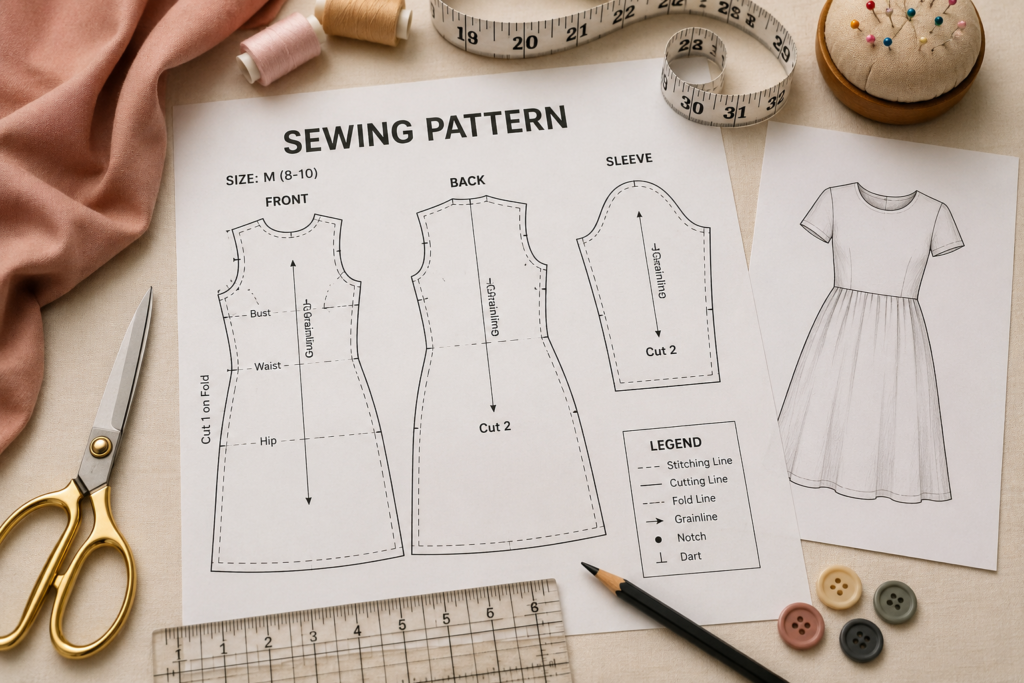
Notches are small marks that help you match different fabric pieces correctly. Dots, circles, and other markings may show where pockets, darts, sleeves, or other details should be attached. Understanding these symbols makes the sewing process easier and helps prevent mistakes.
Prepare Your Fabric
Before cutting your fabric, read the pattern instructions carefully. Wash and iron the fabric if necessary, especially if it may shrink. Place the fabric on a clean, flat surface and smooth out any wrinkles.
Place and Cut the Pattern
Arrange the pattern pieces according to the recommended layout. Make sure the grainline is correctly aligned with the fabric grain. Secure the pattern pieces using pins or pattern weights.
Use sharp fabric scissors to cut carefully along the correct size line. Take your time because accurate cutting is essential for achieving a well-finished result.
Follow the Instructions Step by Step
After cutting, organize all the fabric pieces and match them with the pattern instructions. Follow each step in the correct order. Pay attention to notches, markings, seam allowances, and construction details.
Helpful Tips for Beginners
Always read the complete pattern instructions before starting. Begin with a simple pattern and avoid rushing.
Keep your workspace organized and check each step carefully before moving forward.
Learning how to read and use a sewing pattern gives beginners the confidence to create beautiful and well-fitted projects. By understanding pattern symbols, choosing the right size, preparing the fabric, cutting accurately, and following instructions step by step, anyone can improve their sewing skills. With patience and regular practice, sewing patterns become an easy and useful tool for creating creative designs.