BASICS of Sewing
Sewing is a valuable and creative skill that allows you to transform fabric into beautiful and useful creations. Learning the basics of sewing is the perfect first step for anyone who wants to explore fashion, creativity, or handmade projects.
In this course, you will learn about essential sewing tools, different types of fabrics, accurate measuring, fabric cutting, basic stitches, and sewing machine techniques. You will also understand how to handle fabric properly and complete simple projects with confidence. Whether you are a complete beginner, want to learn sewing as a hobby, or dream of creating your own clothes, this course provides a strong foundation to begin your journey.
With practice, patience, and creativity, you can develop your skills and bring your ideas to life. Start learning the basics of sewing today and take your first step toward becoming a confident and creative sewer!
No previous experience is required—just creativity, patience, and a willingness to learn. Start with the basics, practice your skills, and discover the joy of turning fabric into beautiful handmade creations with confidence and creativty.
Core Concepts
Hand vs. Machine:
Sewing can be done by hand or by using a sewing machine for more efficiency and precision. Hand sewing typically uses simple stitches like a running stitch or a backstitch, while machines utilize techniques such as lockstitch or overlocking.
Techniques:
Important operations include seams (joining fabric pieces), hemming (folding and stitching the edge to prevent unraveling), and backstitching (sewing backward slightly to secure the ends of a sewn line and prevent unraveling).
Essential Supplies For Sewing
To get started, a basic sewing kit requires just a few essential items:
1. Sewing Machine
A sewing machine helps you stitch fabric quickly and efficiently. Beginners can start with a basic machine.
2. Needles
Different needles are used for hand sewing and machine sewing. Choose the right needle according to the fabric.
3. Sewing Thread
Thread is essential for joining fabric pieces. Keep different colors available for various projects.
4. Fabric Scissors
Sharp fabric scissors help you cut fabric neatly and accurately.
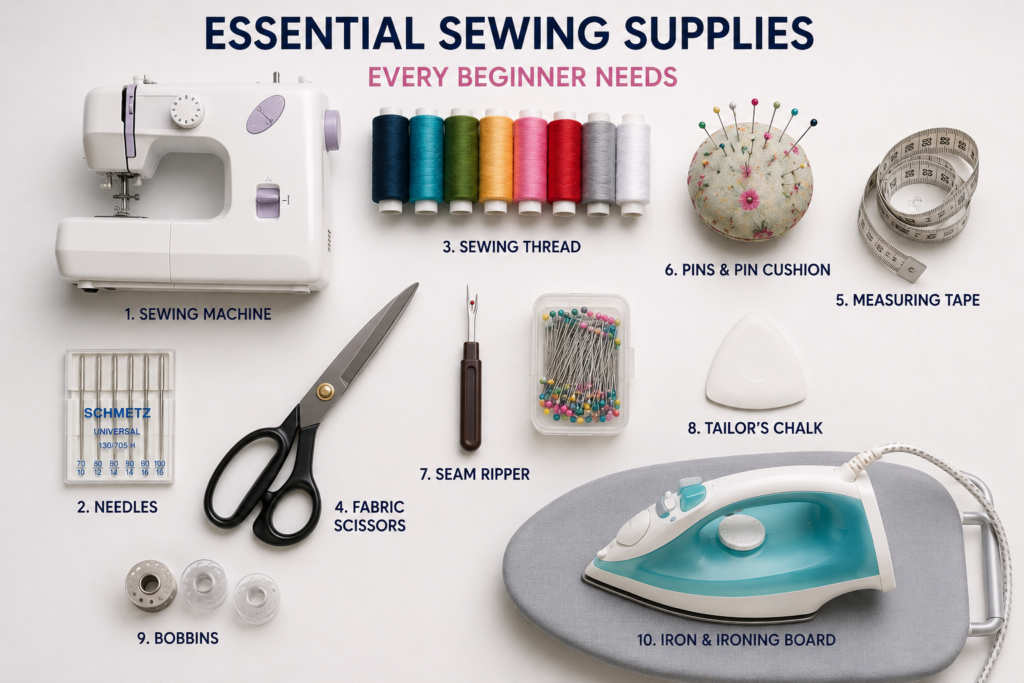
5. Measuring Tape
A measuring tape is important for taking accurate body and fabric measurements.
6. Pins and Pin Cushion
Pins hold fabric pieces together before sewing, while a pin cushion keeps pins organized and safe.
7. Seam Ripper
A seam ripper helps remove stitches easily when you make a mistake.
8. Tailor’s Chalk
Tailor’s chalk is used to mark measurements, cutting lines, and sewing points on fabric.
9. Bobbins
Bobbins hold the lower thread of a sewing machine and are essential for machine sewing.
Types of sewing
1. Hand Sewing:
Hand sewing is done using a needle and thread. It is commonly used for small repairs, embroidery, finishing details, and delicate fabrics.
2. Machine Sewing:
Machine sewing uses a sewing machine to stitch fabric quickly and accurately. It is ideal for making clothes, home décor items, and larger projects.
3. Straight Stitching:
Straight stitching is one of the most basic sewing techniques. It is used to join two pieces of fabric and create strong seams.
4. Zigzag Stitching:
Zigzag stitching creates a zigzag pattern and is often used to prevent fabric edges from fraying.
5. Decorative Sewing:
Decorative sewing includes creative stitches and designs used to add beauty and unique details to garments and fabric projects.
6. Embroidery:
Embroidery is a decorative form of sewing that uses thread to create beautiful patterns, designs, and artwork on fabric.
Learning these different types of sewing helps beginners understand the basics and choose the right technique for each project.
START YOUR SEWING JOURNEY TODAY!
Gather your essential supplies, practice your skills, and transform your creative ideas into beautiful handmade creations with confidence and joy!